Friday, 10 July 2015

"Document Shows C.I.A Reaction to Finding no W.M.D in Iraq"

Quote: "
unnamed
The National Security Archive has posted several newly available documents, one of them an account by Charles Duelfer of the search he led in Iraq for weapons of mass destruction, with a staff of 1,700 and the resources of the U.S. military.
Duelfer was appointed by CIA Director George Tenet to lead a massive search after an earlier massive search led by David Kay had determined that there were no WMD stockpiles in Iraq. Duelfer went to work in January 2004, to find nothing for a second time, on behalf of people who had launched a war knowing full well that their own statements about WMDs were not true.
The fact that Duelfer states quite clearly that he found none of the alleged WMD stockpiles cannot be repeated enough, with 42% of Americans (and 51 percent of Republicans) still believing the opposite.
A New York Times story last October about the remnants of a long-abandoned chemical weapons program has been misused and abused to advance misunderstanding. A search of Iraq today would find U.S. cluster bombs that were dropped a decade back, without of course finding evidence of a current operation.
Duelfer is also clear that Saddam Hussein's government had accurately denied having WMD, contrary to a popular U.S. myth that Hussein had pretended to have what he did not.
The fact that President George W. Bush, Vice President Dick Cheney, and their team knowingly lied cannot be overemphasized. This group took the testimony of Hussein Kamel regarding weapons he'd said had been destroyed years ago, and used it as if he'd said they currently existed. This team used forged documents to allege a uranium purchase. They used claims about aluminum tubes that had been rejected by all of their own usual experts. They "summarized" a National Intelligence Estimate that said Iraq was unlikely to attack unless attacked to say nearly the opposite in a "white paper" released to the public. Colin Powell took claims to the U.N. that had been rejected by his own staff, and touched them up with fabricated dialogue.
Senate Select Committee on Intelligence Chairman Jay Rockefeller concluded that, "In making the case for war, the Administration repeatedly presented intelligence as fact when in reality it was unsubstantiated, contradicted, or even nonexistent."
On January 31, 2003, Bush suggested to Blair that they could paint an airplane with U.N. colors, fly it low to get it shot at, and thereby start the war. Then the two of them walked out to a press conference at which they said they would avoid war if at all possible. Troop deployments and bombing missions were already underway.
When Diane Sawyer asked Bush on television why he had made the claims he had about Iraq's supposed weapons of mass destruction, he replied: "What's the difference? The possibility that [Saddam] could acquire weapons, if he were to acquire weapons, he would be the danger."
Duelfer's newly released internal report on his hunt, and that of Kay before him, for the figments of propagandists' imagination refers to "Saddam Hussein's WMD program," which Duelfer treats as an on-again, off-again institution, as if the 2003 invasion had just caught it in one of its naturally cyclical low tides of non-existence. Duelfer also describes the nonexistent program as "an international security problem that vexed the world for three decades," -- except perhaps for the part of the world engaged in the largest public demonstrations in history, which rejected the U.S. case for war.
Duelfer openly states that his goal was to rebuild "confidence in intelligence projections of threat." Of course, having found no WMDs, he can't alter the inaccuracy of the "projections of threat." Or can he? What Duelfer did publicly at the time and does again here is to claim, without providing any evidence for it, that "Saddam was directing resources to sustain the capacity to recommence producing WMD once U.N. sanctions and international scrutiny collapsed."
Duelfer claims that former Saddam yes men, rigorously conditioned to say whatever would most please their questioner, had assured him that Saddam harbored these secret intentions to start rebuilding WMD someday. But, Duelfer admits, "there is no documentation of this objective. And analysts should not expect to find any."
So, in Duelfer's rehabilitation of the "intelligence community" that may soon be trying to sell you another "projection of threat" (a phrase that perfectly fits what a Freudian would say they were doing), the U.S. government invaded Iraq, devastated a society, killed upwards of a million people by best estimates, wounded, traumatized, and made homeless millions more, generated hatred for the United States, drained the U.S. economy, stripped away civil liberties back home, and laid the groundwork for the creation of ISIS, as a matter not of "preempting" an "imminent threat" but of preempting a secret plan to possibly begin constructing a future threat should circumstances totally change.
This conception of "preemptive defense" is identical to two other concepts. It's identical to the justifications we've been offered recently for drone strikes. And it's identical to aggression. Once "defense" has been stretched to include defense against theoretical future threats, it ceases to credibly distinguish itself from aggression. And yet Duelfer seems to believe he succeeded in his assignment." Go to: http://davidswanson.org/node/4823?utm_source=twitterfeed&utm_medium=twitter

"Innovation Reveals the "Holes" and Shows the Way" Re: Mobility, Electric Bikes and Spinal Injury #Welfare #Benefits #ESA #PIP #ATOS

Quote: "PRIME EXAMPLE...

Posted by Gerard on July 9, 2015, 10:17 am, in reply to "Re: Indispensable people. "

...I have an electric bike..this helps me considerably esp. my lower back problems..Nowhere in ANY of the state literature regarding disability and mobility is there provision made for the thousands of "half-way" houses like me (who also maintains he could have got a lot better a long time ago!), who can/could benefit from the use of such a device, check the PIP and ESA forms..nada, zilch, nothing, we are supposed to be 48hr/week as able as they..this eugenicist nonsense has been going on forever!

http://www.publications.parliament.uk/pa/cm201415/cmgeneral/deleg6/150224/150224s01.htm

http://www.bikebiz.com/news/read/uk-joins-eu-e-bike-laws-but-fast-e-bikes-fail-to-win-dft-approval/017402

Posted by Gerard on July 9, 2015, 8:42 am, in reply to "‘I Was Dealing With Broken People Being Kicked By The State. I Decided To Look Deeper’"

Take it from someone who has spent 30 years or so on the inside..the system needed reforming..(there has always been a glass ceiling), but with more care, therapy, after-care follow up, physio and the ability to make sensible independent choices about employment (without the terrible prejudice that austerity scapegoating engenders in the body politic -perhaps their worst crime, that of "second hand" violence and intimidation-).

Re: PRIME EXAMPLE...

Posted by Gerard on July 9, 2015, 11:08 am, in reply to "PRIME EXAMPLE..."

and they are about THAT GOOD at spinal medicine generally........!!!

‘I Was Dealing With Broken People Being Kicked By The State. I Decided To Look Deeper’

Posted by Stevo!! on July 9, 2015, 12:55 am

‘I Was Dealing With Broken People Being Kicked By The State. I Decided To Look Deeper’
JUL
2015 Wednesday 8TH posted by Morning Star in Features

NICK DILWORTH, welfare activist and exposer of DWP lies, talks exclusively to Ruth Hunt
WHEN Chancellor George Osborne announces yet more cuts to benefits, notable welfare advice specialist, trainer and campaigner Nick Dilworth will be scrutinising all claims and figures.

He will be testing whether the numbers and arguments stand up, as well as assessing the likely impact of each cut. The manipulation of data and misinformation spread by the government and DWP, which is then picked up and amplified by the Tory press, is of particular concern to Dilworth as it’s coupled with “massive misunderstanding among the largely welfare-illiterate general public.”

Separate from his day job as a welfare benefits specialist with Advice Plymouth, Dilworth is a member of the team at social justice site www.ilegal.org.uk after being asked by founder Patrick Torsney to make a connection with the public.

His took on the role “because it was obvious to me that the numbers and claims weren’t adding up. Government and the media were making claims to be finding thousands fit for work and (getting them) into work. It didn’t tally with what I was seeing.
“I was dealing with broken people who were being kicked by the state, so I decided to put my analytic skills to the test and take a deeper look.”

After four years he has a sizeable following on Twitter, with two articles on the website receiving more than a quarter of a million hits each. One post on the hypocrisy of Cameron’s Help to Buy scheme went viral, provoking a comment from Number 10, a mention in both the House of Commons and Lords, within mainstream media and on TV.
“This approach,” says Dilworth, “is about educating people over the facts.” It involves making statistics interesting, with him managing to dismantle seemingly impregnable numbers to reveal gaping holes in both policy and arguments. He admits “this was a real challenge but it’s been immensely satisfying.”

Iain Duncan Smith (IDS), a “serial offender” when it comes to using statistics in a deliberately misleading way, comes in for stinging criticism from Dilworth, who points to a moment on Question Time when IDS said how proud he was to be getting 2.5 million sick people back to work.
“He said this to warm applause from the audience, despite 3.9m capability assessments (taking place) under the coalition. The truth of it is there are still 2.5m on the sick. Lately the figure has been rising further.”

Dilworth feels “the online presence is a lot about engaging with those who’ve lost faith in society, the forgotten lives which welfare reform is doing nothing for.” As well as seeing this online, he is all too well aware of the detrimental impact the demonisation and deluge of cuts is having on the mental health of his clients.

He recalls one of the people he helped: “A grown man in bits, his eyes filled with terror, his shaking only stopping when I took the DWP’s manila envelope stuffed full of bad news for him.”
The treatment of such people makes him angry and “affirms a passion in me to do what I can to get people a little bit of justice.”

The ”capacity for work” tests and benefits sanctions are “about people with profound problems being disbelieved, with ridiculous findings that they are fit for work, when they clearly are not. The system’s too rigid to recognise complex problems.”

Dilworth feels it goes back to mental health, which is the key issue, affecting millions, not thousands. “It’s the elephant in the room, invisible and all too easy to ignore. I don’t see government being serious about the need to invest in becoming a more integrated society.”

Dilworth broadly welcomes constructive welfare reforms and as such has no issue with the aims of employment support allowance (ESA). Personal independence payment (PIP) also has some positive points. However, he believes “the problems lie in the roll-out of these reforms coupled with the wilful refusal to measure the impact upon existing claimants.

Government, having failed with ESA to date, knows it needs to find a claimant reduction of 400,000. It means a return to the punishing testing regime of mid-coalition, before it was dumbed down in the run-up to the election. On PIP I expect 600,000 people will lose out.”

He adds: “It’s beyond deplorable that the government is contemplating taking the work-related activity group payment from people who’ve already been through a very stringent test to get awarded it in the first place.”

He saves his scathing criticism for universal credit, which, he says, “is a failed project before it’s started. By the time it’s anywhere near up and running, it will be out of date. It’s certainly no miracle cure to transforming lives and making work pay.”

He firmly believes some of the £12 billion of savings the government is seeking are intended to free up money to prop up IDS’s pipe dream.
Asked if he had a message for the British public, Dilworth replied: “Don’t judge unless you’ve been there, by which I really mean there. People are closer to having to be reliant on the state than they think.

“I’ve seen a perfectly healthy hard-working life lost in a tragic accident once. It changed my perception forever. It was all over in less than a few minutes. What if he hadn’t died, and had lived to be severely disabled? How would his young family cope? Trust me, lives can change dramatically in less time than the adverts appear between your favourite TV programmes.”

What about a message for IDS? “I want him to tell the truth.”
Nick Dilworth is also a consultant and co-founder with New Approach www.newapproachuk.org.

http://www.morningstaronline.co.uk/a-528f-I-was-dealing-with-broken-people-being-kicked-by-the-state-I-decided-to-look-deeper#.VZ21d19Viko

Stevo!! He's a broth of a boy!" All posts to MediaLens message board (author's posts edited at "Ed's" discretion).


Benefit (lack-of), Related Deaths and the Need for Oversight and Transparency.

Quote: "Benefit Related Deaths and the Need for Evidence-Based Policy and Training - draft of Sunday 4th Jan 2015

Benefit Related Deaths

The horrible truth is that there have been a large number of benefit related deaths which are now becoming more publicly known. Despite this DWP (Department of Work and Pensions) knowledge and training in Suicide Prevention, Mental Health First Aid, and aspects of physical and mental health is poor. Such poor understanding, driven by DWP and Government policy, and incompetence can often be a matter of life and death. In fact there is evidence of a deliberate sanctions policy that puts people at risk. Examples of campaigners' activities and publications against these dangerous benefit failures are in. The Independent states "The spending watchdog" (National Audit Office) "has found that disabled people are facing 'distress and financial difficulties' because of the mismanagement of a new Government benefit scheme."

Suicide, and Mental Health Resources 

These are some resources for suicide prevention training, mental health first aid training, and help for people who have lost someone through suicide. Resources on benefits are available in.

Sanctions

Are any benefit sanctions legal? Benefits are what the Government says a person needs to live on. Everyone has the right to life! MIND explain why sanctions are harmful to mental health and wellbeing. Of course financial results of sanctions can be poverty, physical health issues, and death also. There is evidence of target driven sanctions being used as a political tool.

DWP claims it & ATOS help people into work, but only assess people & sanction them. Money spent on that nonsense should on creating jobs and helping people into them. When a DWP customer can't get a job they get sanctioned for 'not making enough effort' - when customer does get a job - 'DWP got them a job'. Many of the sanctions are for ridiculous reasons and they are dangerous to health and wellbeing. Sanctions are applied to sick and disabled people who should be exempt, as they have been judged not fit to work (only capable of certain work related activities under medical advice).

In a January 7th discussion of the Oakley report- Jobseeker’s Allowance sanctions: independent review several experts heavily criticised Government policy on sanctions, at a relevant parliamentary committee  hearing. Professor Peter Dwyer Welfare conditionality project - asked whether current consensus on conditionality to 'prevent worklessness' is ethical. He questioned whether there was any evidence in favour of the consensus amongst politicians and policy makers, and whether evidence against this policy had been ignored. Dr David Webster - articulated that DWP are sanctioning people willy nilly, at that there is no legal basis for this. Hence sanctions are overturned on appeal, as the only requirement is to be available and look for work, not to do so in a way prescribed by DWP. He argues that sanctions problems inevitable from secret system without safeguards and that sanctions are a secret penal system that runs parallel to the legitimate court system, which addresses any illegality. This is also argued in. Dr David Webster explains that training works best when it's voluntary, most people who are unemployed want to work, and that the best way with DWP to be involved is to assist the DWP service user to follow their own plan and engage with the person to advise as necessary. Citizens advice explained that in their experience conditions imposed by DWP are inappropriate to the, and thus they are set up to fail. Chris Mould of Trussell Trust gave results from responses as to why people had to be referred to foodbanks as catastrophic collapse in income leading to access to foodbanks. The referral form has been consistent for many years, and does not specifically refer ask about sanctions (also service users may not necessarily use that term). For all these reasons benefits experts are urging the Government and DWP to suspend sanctions in general and specifically when people with mental health issues or disabilities are impacted.

Also on January 7th 2015 Newcastle MP Chi Onwurah demanded an end to demonisation of people on benefits . Inevitably the issues of sanctions are linked with severe poverty in families, and with benefit related deaths. Biased and inaccurate fitness for work tests, the sanctions regime, and other failures in benefit provision compound each other. The result is that jobsearch requirements on many people are unachievable because they are on the wrong benefit. E.g. They should be on ESA (Employment and Support Allowance) but are on JSA (Jobseeker's Allowance), or people are in the wrong group.
.
In general the benefit system is poorly suited for people with disabilities, leading to appalling financial problems and, and upset from poor communications and procedures.

Because of the assumptions that the DWP system understands and enforces the return to work plan to the service user rather than engaging with their plan failures are inevitable, any assumption that the jobseeker is lazy, worsens this service. Reasons for this failure are outlined in My blog post (Why forcing people to work for benefit won't work - http://peterhaleserviceuser.blogspot.co.uk/2013/10/why-forcing-people-to-work-for-benefit.html - Wombling for Welfare!) counters the reasoning of the DWP policy of pressuring people to work for free. People need their basic needs catered for before they can develop career goals. The Keep Volunteering Voluntary Campaign encourages organisations to opt out of participating in any scheme that is compulsory or for which people are pressured to take part. As ethical organisations pull out of involvement in compulsion and workfare, only the least ethical and most profit centred organisations are left to take part. Thus meaning that organisations such as Poundland, who have no motive other than profit gain free labour. It is not in the interests of voluntary organisations to 'employ' people on workfare, ethically or for provision of services, and of course compulsory volunteering, and working for free are contradictions in terms.

Inevitably all of these sanctions and other DWP failures and policies lead to fear [56]. Policy should be evidence driven. The alternative of the opposite unethical, unscientific approach used in a fake DWP Psychometric test.

"Sanctioning someone with a mental health problem for being late for a meeting is like sanctioning someone with a broken leg for limping" - Paul Lewis - https://twitter.com/paullewismoney

Poverty and Hunger

Government- benefit cuts do not help people lift themselves out of poverty. People can't lift themselves when they can't eat enough, and heat homes. The Guardian makes this point]. Also, food poverty is causing people to be hospitalised. The largest cause of referrals to food banks is that of welfare failings . How benefit failings are leading to a rise in use of food banks was researched by Sheffield University, and is explained in. There has been considerable criticism of the contrast between Government members professed Christian views, and the actuality of the increase in UK food poverty and food bank use. Government needs to be more in touch with the consequences of its policies. The rising cost of living has also been a major cause of the increase in use of food banks. More information on food banks is available in a Daily Mirror guide. Government must address this issue because poverty has a catastrophic effect on people's mental health.

Fitness to Work

DWP claims it and ATOS help people into work, but they only assess people, stop benefits, and sanction people. Money spent on that nonsense should go to finding people work and training. Ironically the assessment process itself has not been assessed by the Government, nor have any of its users been involved significantly in its design, nor in their own medicals. The focus has been on finding people fit for work, and as with anything where wishes and bias interfere with objectivity, bias is introduced. This is the opposite of evidenced based policy and as it involves people and health it has been a massive unethical experiment on huge numbers of ill people. Inevitably this has caused a lot of deaths, illness, poverty, and misery.
The Government and DWP set the rules for these failed fitness to work tests and drove the policy - It is not just ATOS failing - it is DWP and even CPS (Crown Prosecution Service).
For the NHS - patient involvement is important and structured, this combines with regulatory inspections such as hospital inspections. The need for this has been agreed and provided for because lives are at stake. The same is true for fitness to work assessments, sanctions regime, and assessment for Personal Independent Payments. Lives are at stake if these decisions are wrong. This would entail recruitment of a "small army" of doctors, nurses, patients and carers. Inspection could also help ensure that staff are not being lost to the NHS. Fitness to work tests are completely unsuitable for those with mental health issues (and also for those with physical health issues). This unsuitability is partly due to the confrontational nature of the tests, and partly due to bias and inaccuracy . This whole system is expensive and leads to avoidable hardship and avoidable appeals for so many wrong decisions.

Despite DWP showing little interest in listening to the views of users of its service or in allowing inspections, campaigners have made considerable progress in bringing the problems into focus, and reporting on them. This has also involved working with politicians and press to put pressure on the Government over policy. An appalling case of a person in a persistent vegetative state being sent a letter inquiring if he was fit to work has been highlighted.

ATOS are at last leaving the fitness for work process but this is unlikely to result in resolution of any of the problems in its design and implementation .

All of these problems are a very real risk to people with all kinds of disabilities. These are some resources available for people having to encounter the fitness for work system .

Bedroom Tax

Disabled people and carers are worst affected by bedroom tax and welfare reforms, and there have been many injustices, legal challenges and human rights complaints over this. More generally the bedroom tax has been heavily criticised for causing misery, poverty, and homelessness. Further criticism emerged over ineffectiveness, inefficiency, lack of savings, impossibility of bedroom tax payers moving to smaller homes (lack of smaller homes, and those adapted for disabilities), and financial pressure on councils. All of these failings have led to the bedroom tax becoming an important election issue . These problems are of the institutions themselves, systems, computing, and arguably on the policy itself and focus on policy change around welfare reforms and cuts.

Universal Credit

In command-and-control organisations, the ILLUSION of control is much more comforting - and hence valuable - than any actual control. Iain Duncan Smith put his faith in new leadership of Universal credit. This isn't how big IT projects succeed. They succeed when users and staff are the main drivers. Government plans to deliver Universal Credit on time and on budget, simply by increasing the budget and putting back the date. It will still fail. This blog post of mine explains why, and goes into technical reasons for all the other problems that cause the human suffering -

Government Digital By Default - Reality Check - http://userdrivenmodelling.blogspot.co.uk/2013/08/government-digital-by-default-reality.html - Digital by Default will leave vulnerable people more vulnerable and excluded.

Labour considered the idea of Universal Credit to be too risky and impractical to implement. There are very many serious practical problems.

Solutions

Two essential things that need to happen with this are short term improvements to reduce benefit related death rates within the current failed system, and a medium term reconstruction of the system based on what previously worked.

It used to be that one of the key aims of jobcentres was to assist the person to find work. This was at a time of relatively full employment. Even then it was understood that there would be a structural rate of unemployment due to people moving in and out of work. This structural rate could still be reduced by good careers advice, and assistance, help to find work, and prompt and efficient payment of benefits. This is all of greater importance in times of high unemployment, something that has been persistent now for decades. This importance is because it is possible to reduce both the structural rate of unemployment, and that above this rate, and because people who are in work create work via both their work and their spending.

However, it has become increasingly difficult for jobseekers to deal with jobcentres, and the benefit system in person. Rules have become more inflexible and administration more remote from the 'customer'. Now most assistance is provided by telephone helplines in a remote location from people with no understanding of the jobseeker nor any flexibility in decision making. This problem is exacerbated by very poor, and biased fitness assessments with virtually no involvement of the people assessed in construction and monitoring of this system, nor in their own assessments. An overcentralisation of systems due to a misguided strategy of digital by default (leaving the most vulnerable and poor excluded) adds to this problem. An example is the failing Universal Jobsmatch system.

For mental health (and with all other types of health) this breaks the evidenced-based policy of 'No decision about me without me'. For mental health this also breaches the evidenced-based policy of parity of esteem for mental health. For everyone this is a breach of Equality Rights and Human Rights.

The role of evidence-based policy in hindered by the current coalitions repeated refusal to undertake a Cumulative Impact Assessment of the way the Welfare Reform Act affected Sick and Disabled people ." Go to: http://peterhaleserviceuser.blogspot.co.uk/2015/01/benefit-related-deaths-and-need-for.html


For references, sources and links.

Tuesday, 7 July 2015

"The Road to Sanaa" Al Jazeera Documentary (recommended)

Quote: "With access to previously secret Yemeni defence ministry documents and testimony, Al Jazeera World investigates how the way was paved for the Houthis to take the city of Amran on their progress towards the capital Sanaa. It asks whether the government of President Abd-Rabbu Mansour Hadi and his defence ministry were involved.
The Road to Sanaa tells the story of an alleged conspiracy by the Yemeni government against the apparently loyal army officer, Brigadier General Hamid al-Qushaibi and asks whether by appearing to collude with the Houthis, it unwittingly plotted its own downfall.
The Yemeni army fought a series of battles against the Houthis between 2004 and 2011 in which Qushaibi was key. He led the 310th Armoured Brigade based in the northern city of Amran, Qushaibi's hometown. As an army officer, he had been loyal to the governments of both former President Ali Abdullah Saleh and his successor, Hadi.
There was no serious response from the government particularly the defence minister. It was a combination of negligence and complicity. The defence minister visited the Houthi and met their military leader. This demoralised our fighters. How could he visit the Houthi militia rather than his own men?
- An army commander of the 310th Armoured Brigade who did not want to reveal his identity due to security concerns
However, Qushaibi had supported the Youth Revolution in Yemen in 2011 and, by doing so, upset Saleh. He also arguably represented a threat to Hadi after Saleh was removed from power in February 2012.
The Houthis had started as a peaceful group aimed at reviving the Zaidi strain of Shia Islam, but developed into an armed militia under their founder Hussein Badr Eddin al-Houthi.
He was killed in 2004 and succeeded by his younger brother and current leader, Abdel-Malik al-Houthi. Under him, the Houthis began to move south from their stronghold in the northern province of Saada in June 2014. As they did so, Amran was the last bastion of government defence on their way south towards Sanaa, and the fall of Amran in unusual circumstances in July 2014, opened the way for the Houthis to move directly on to the capital.
The Road to Sanaa raises the question as to whether the government genuinely supported Qushaibi in his defence of Amran - or whether it effectively hung him out to dry, by allowing the Houthis to kill one of the men who'd openly supported the revolution against Saleh in 2011. It asks whether the Hadi government and its Ministry of Defence took a calculated risk by enabling the Houthis to defeat the 310th Armoured Brigade in Amran and kill Qushaibi.
Seven officers from Qushaibi's brigade, who do not want their identities revealed for security reasons, recount the events of that ill-fated battle. A senior Yemeni government official - who also wished to remain anonymous - subsequently confirmed their version of events in a phone call to the Al Jazeera team after the fall of both Amran and Sanaa.
"The government only gave Qushaibi verbal promises: We'll send you this. We will support you. These were just words, merely lies. He believed them, in good faith. Air strikes started but only warned the Houthis. Each time he attacked, the Houthis moved elsewhere, "an army commander of the 310th Armoured Brigade tells Al Jazeera World.
According to testimonies in the film, supplies were cut off, requests to the government largely fell on deaf ears, and when backup troops arrived "they took off their uniforms and joined the Houthis".
What the president and the Ministry of Defence did not foresee was that, by doing so, they virtually opened the door for the Houthis to move on to Sanaa and take over the institutions of government in September 2014." Go to: http://www.aljazeera.com/programmes/aljazeeraworld/2015/06/road-sanaa-150624060410650.html
 For video..recommended.

"The War on Yemen, America's Plans to Use Nuclear Weapons in The Middle East"

Quote: "Unconfirmed reports based on a video release dated May 20, 2015 point to a massive and unprecedented bomb explosion in Yemen. 

Go to:  http://www.liveleak.com/view?i=fdf_1432986955
For video.

The reports suggest without corroborating evidence that the explosion could have been the result of a nuclear strike, using a tactical nuclear weapon. There is no evidence to that effect. 
Whatever the nature of this explosion, it constitutes a crime against humanity.
While there is no concrete evidence that the US led alliance has used nukes against Yemen, the broader issue of nuclear war against the Middle East is, nonetheless, of utmost relevance.
Washington’s nuclear agenda as defined by the 2001 Nuclear Posture Review (2001) consists in developing its tactical nuclear arsenal for use against non-nuclear States.  
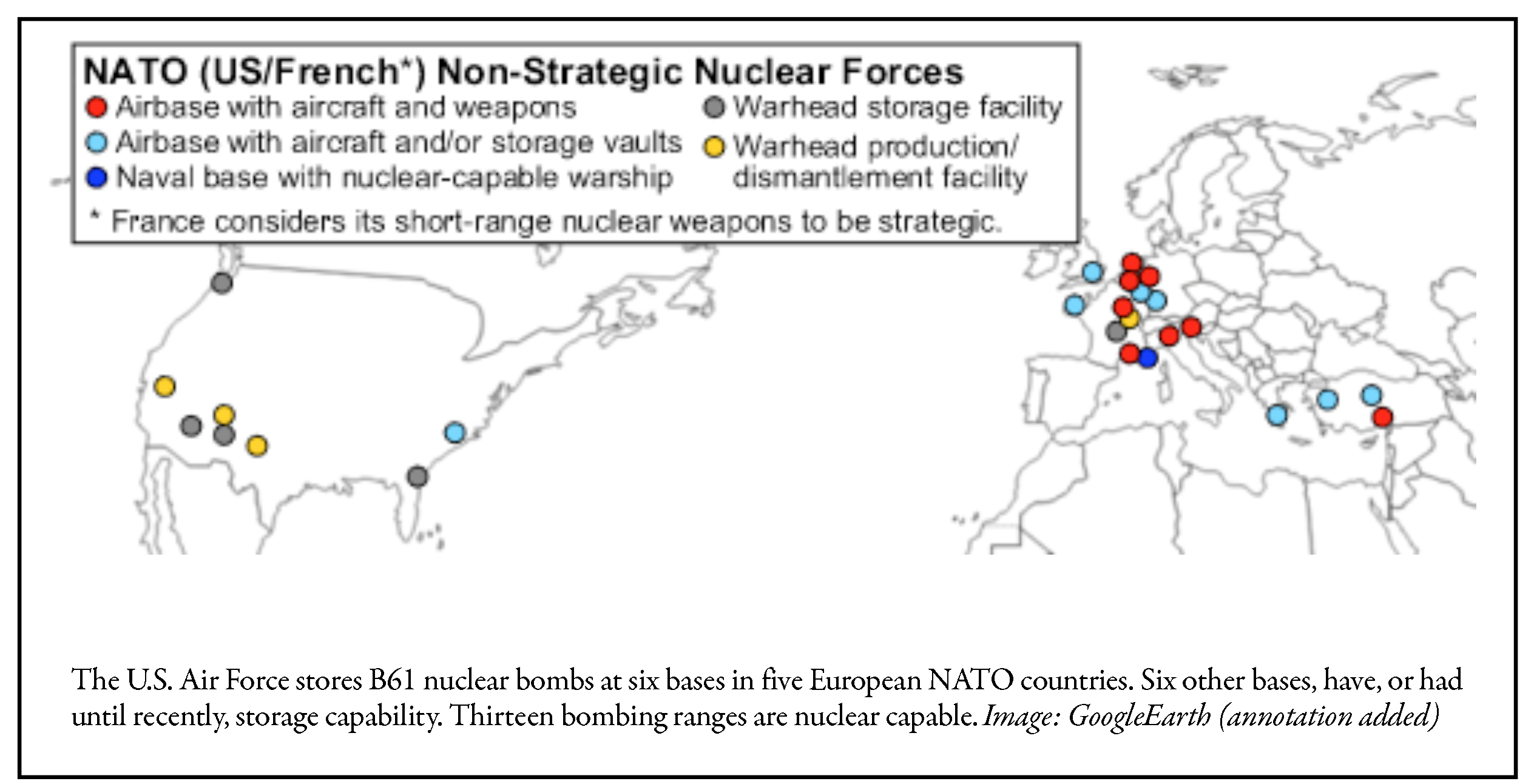
Since 2002, US-NATO tactical nuclear weapons targeting the Middle East are fully deployed. 

Tactical nuclear weapons or so-called “mini-nukes” are bunker buster bombs equipped with a nuclear warhead. Their explosive capacity (e.g. the B61-11) varies between one third and six times a Hiroshima bomb.
The image (left) is a B61-11 tactical nuclear bomb, which can be launched either from a B-2 bomber or an F-16.
The B61-11 is a bon fide thermonuclear bomb, a Weapon of Mass Destruction (WMD) in the real sense of the word.
Sofar the evidence is scanty. There are no reports on the aftermath of the alleged strike in Yemen which would provide further information.
The mainstream media has not covered the issue. The matter requires further investigation in the context of a longstanding US agenda to use nuclear weapons against targets in the Middle East.
Video: The Yemen Bomb Explosion 
Nuclear Attacks against countries in the Middle East
The alleged yet unconfirmed use of mini-nukes against Yemen raises the broader issue of US nuclear doctrine:
  1. Tactical nuclear weapons or mini-nukes are part of the US-NATO arsenal.
  2. They were cleared for use in the conventional war theater by the US Senate in 2002.
  3. They can be used without the approval of the Commander in Chief;
  4. The US military contends that “mini-nukes” are “humanitarian bombs” which minimize “collateral damage”. According to scientific opinion on contract to the Pentagon, they are “harmless to the surrounding civilian population because the explosion is underground”.
While the scanty “evidence” of a nuclear attack against Yemen remains unconfirmed, the use of mini-nukes against countries in the Middle East has been on the Pentagon’s drawing board for almost 20 years.  In 1996 under the Clinton administration, the B61-11 tactical nuclear weapon was slated to be used by the US in an attack against Libya.

B61-11
The man behind this diabolical project to nuke Libya was Assistant Secretary of Defense Harold Palmer Smith Junior. “Even before the B61 came on line, Libya was identified as a potential target”. (Bulletin of the Atomic Scientists – September/ October 1997, p. 27, emphasis added)
Harold Palmer Smith had been appointed by President Bill Clinton to oversee nuclear, chemical, and biological defense programs with a focus on “the reduction and maintenance of the US arsenal of nuclear weapons”. From the outset, his actual mandate, was not to “reduce” but to “increase” the nuclear arsenal by promoting the development of a new generation of “harmless” mini-nukes for use in the Middle East war theater.

The Department of Defense’s objective under Harold Smith’s advice was to fast-track the “testing” of  the B61-11 nuclear bomb on an actual country in the Middle East.
Five months after [Assistant Defense Secretary] Harold Smith called for an acceleration of the B61-11 production schedule, he went public with an assertion that the Air Force would use the B61-11 [nuclear weapon] against Libya…  (http://www.nukestrat.com/us/afn/B61-11.htm,)
While the Pentagon later denied its intention to bomb Libya’s Tarhunah plant, it nonetheless confirmed that “Washington would not rule out using nuclear weapons [against Libya]“. (Ibid., emphasis added.)
What is the relevance of the history of the B61-11 tactical nuclear bomb and the earlier threats directed by the Clinton administration against Libya?
Was the project to nuke Libya shelved?
Are countries in the Middle East potential targets for a nuclear attack? (For further details, see Michel Chossudovsky,  Dangerous Crossroads: Is America Considering the Use of Nuclear Weapons against Libya? Global Research, April 2011).
originalThe tactical nuclear weapons were specifically developed for use in post Cold War “conventional conflicts with third world nations”.  In October 2001, in the immediate wake of 9/11, Defense Secretary Donald Rumsfeld envisaged the use of the B61-11 in Afghanistan. The targets were Al Qaeda cave bunkers in the Tora Bora mountains.
Rumsfeld stated at the time that while the “conventional” bunker buster bombs “‘are going to be able to do the job’, … he did not rule out the eventual use of nuclear weapons.” (Quoted in the Houston Chronicle, 20 October 2001, emphasis added.)
The use of the B61-11 was also contemplated during the 2003 bombing and invasion of Iraq as well as in the 2011 NATO bombings of Libya.
In this regard, the B61-11 was described as “a precise, earth-penetrating low-yield nuclear weapon against high-value underground targets”, which included Saddam Hussein’s underground bunkers:
 ”If Saddam was arguably the highest value target in Iraq, then a good case could be made for using a nuclear weapon like the B61-11 to assure killing him and decapitating the regime” (.Defense News, December 8, 2003).
There is no documentary evidence, however, that the B61-11 was used against Iraq.
The use of mini-nukes against non-nuclear states in the Middle East as defined by the 2001 Nuclear Posture Review remains on the Pentagon’s drawing board. Moreover, the B61-11 tactical nuclear weapon (Made in America) as well as the B61 12 upgrade have been deployed for use against targets in the Middle East including Iran, Syria and Libya by several European countries including five non-nuclear states (Belgium, Germany, Italy, Netherlands, Turkey). The new B61 12 is a 50 kiloton weapon, which would be delivered by the F-35 fighter jet.
According to reports, Israel also has an arsenal of tactical nuclear weapons.
The Nature of The Yemen Explosion
While the Yemen explosion in the video (above) appears similar to that of a B61-11 tactical nuclear bomb with a mushroom cloud, it is worth noting that the conventional Mass Ordnance Penetrator (MOP) bomb triggers a similar explosion.
The largest conventional bomb in the US arsenal is the so-called Mass Ordnance Penetrator (MOP) or the Mother of All Bombs (MOAB) (see images below). The explosion of a MOP (which is a conventional weapon) is (according to photographic evidence) similar to that recorded in the Yemen video. Moreover, according to unconfirmed reports, the MOP was used during the war on Iraq.
In other words, the nature of the explosion does not in itself prove that it was the result of a (tactical) nuclear strike. It could have been a MOP or a bunker buster bomb explosion. But even in this case, the evidence is scanty.
Both the MOP and the mini nukes are bunker buster earth penetrating bombs. The MOP however is a conventional weapon. It does not have a nuclear warhead.
It is worth noting that in mid January 2015, two months prior to the onslaught of the Saudi bombing campaign against Yemen, “the Pentagon was involved in the testing of the largest bomb in its arsenal”, an improved version of the bunker buster Mass Ordnance Penetrator (MOP), developed by Boeing.
archive photo of MOAB explosion
According to reports, The Mass Ordnance Penetrator e.g. MOP GBU-57, would be delivered with either a B-52 or a B-2 bomber due to its weight. The decision to undertake a MOP strike would emanate from US  “Global Strike Command”.

GBU-57A/B Mass Ordnance Penetrator (MOP)
There are indications, however, that a lighter MOP missile has been developed. According to Air Force Magazine, USAF Lt. Gen. Phillip Breedlove (currently Commander in Chief of NATO) stated in June 2010 that “the Next-generation Penetrator Munition should be about a third the size of the Massive Ordnance Penetrator so it could be carried by affordable aircraft”.
In the image below a B52 bomber releases a MOP, escorted by a F-16.  The MOP is a tele-guided missile.
B-52 dropping a MOP escorted by an F-16 during a test trail.
The B-2 bomber operates out of a US Air force base in Missouri. With refuelling it can be deployed Worldwide. The B2 can be used to deliver a Mass Ordnance Penetrator (MOP) missile or a tactical nuclear bomb.

"The £55 Billion Govt. Heist you did not Hear About"

Quote:"
  1. Budget this week with anticipated £12 billion of welfare under the axe
  2. 2010 emergency budget had tiny condition changing the benefit calculation method
  3. The ‘tweak’ saved the government £15 billion over last parliament
  4. Over the course of this parliament another £40 billion will be taken from the poor and vulnerable
No doubt in this weeks budget all eyes will be firmly fixed on the headline grabbing details of how it will cut its welfare budget by something in the order of £12n. This equates to around 10 percent of the annual invoice for benefits.
However, there aren’t many people, certainly not the mainstream press who have ‘cottoned on’ to the massive fraud that this government has already implemented that will reduce payments to those already dependant upon state assistance to get by. It effectively equates to the biggest assault on state support of the most needy and vulnerable in our society.
After the emergency budget a few weeks after the 2010 general election was a small section in its 100 or so pages stating that future benefits, tax credits and public sector pensions for retired emergency workers, civil servants, council employees and NHS staff would rise in line with a different measure of inflation: the consumer price index (CPI). Previously, the default increase was the retail price index, RPI – which has historically averaged about 1% higher.
Treasury documents have already admitted that this change of calculation would save them £15bn over the life of the last parliament.
In 2011, the Treasury extended this little scam to thresholds for income tax, national insurance contributions and inheritance tax.
Whilst there are no official calculations of the combined impact of these rather scandalous changes, the Office for Budget Responsibility’s most up-to-date guess is that the inflation switch will save the Treasury more than £40bn over this parliament.
Of course, the purpose, one should not forget, is that all your essential services such as electricity, gas, water, the local bus and train all continue to rise in tune with the higher calculation of RPI. So just to get that right, the government collects taxes based upon the higher RPI and pays out on the lower CPI – how convenient.
The OBR’s has, to be fair, tried to issue its own warning that unless the policy is reversed after 2020 “the value of the benefits would fall dramatically, relative to the living standards of the rest of the population”.
Then of course, there is the budget this week. There’s £12 billion to add to what has already been eroded and will continue to so for decades to come.

Thursday, 2 July 2015

"Is Waste from Israel's Nuclear Programme Poisoning Palestinians?"

Quote: "Israel's nuclear programme has operated in the shadows with little international oversight. Now it appears accidents and the unsafe disposal of nuclear material could be poisoning the West Bank.

Israel's Dimona nuclear reactor may be responsible for the increase in illnesses and still-births in nearby Palestinian populations, it has emerged.

It is the one of the few nuclear facilities in the world not subject to international safety inspections by the International Atomic Energy Agency.

The reactor has already been implicated in illnesses and environmental damage among the area's Israeli population.

Ibrahim, from a small village 11km south of Hebron, told the story of his still-born child.

"When the midwife told me my child had died at birth, I was overcome with sadness," he said. "However, the sadness became easier to bear when I learned that my child was born with one eye and birth defects that would have stayed with him for life."

Dr Mahmoud Saadah, the head of the Palestine branch of International Physicians for the Prevention of Nuclear War (IPPNW), holds the Dimona nuclear reactor directly responsible for the increase in deformities in the area and surrounding villages.

Ignoring Palestinian victims


The Dimona nuclear reactor is located 10km southeast of the city of Dimona, the third-largest city in the Negev.

Construction on the nuclear reactor began in 1958 with French assistance, and Israel has another nuclear reactor for research and medical use at the Soreq Nuclear Research Centre.

An Israeli documentary film named The Dark Secret of the Dimona Reactor investigated the facility. The film revealed information about Israelis affected by the reactor and the environmental damage it has caused to the surrounding area.

However, the documentary film ignored Palestinian victims, so al-Araby al-Jadeed set out to discover the harm done to Palestinians from the reactor, in addition to the reason the Israeli military allowed the disclosure of information previously classified.

Al-Araby
met Dr Khalil Thabayneh, a nuclear physics researcher at Hebron University. Thabayneh is the only Palestinian specialist who has conducted studies over a number of years to measure radiation levels in the West Bank, using advanced equipment to detenct levels of radioactive material in water, rocks, soil and plants.

Thabayneh's studies reveal levels exceeding international permitted averages in the Hebron governorate. The most commonly radioactive element in the southern West Bank, according to Thabayneh, is Caesium-137. Any amount of Caesium-137 in the environment is considered dangerous.

"This isotope does not exist in nature and only occurs due to nuclear activity. When found in high concentrations, the source is either nuclear experiments, radioactive leaks or the detonation of nuclear weapons," said Thabayneh.

"The only places found to have higher concentrations than in the West Bank were after the explosion of the Chernobyl reactor in the Ukraine in 1986 and in Fukushima in 2012. These two cases had the highest recorded levels of Cesium-137 in the world, which means the southern West Bank has the highest levels of Cesium-137 in the world if we exclude areas that have witnessed nuclear disasters," added Thabayneh.

The dangers

Thabayneh revealed the greatest danger to humans from Caesium-137 is cancer. Other elements such as uranium and polonium aso pose great dangers to children, and can cause cancer and affect the reproductive system, causing infertility in both men and women and cause birth defects and repeated miscarriages.

Dr Saadah, of International Physicians for the Prevention of Nuclear War, has been practicing medicine in the area for decades.

He confirmed Thabayneh's findings through his personal observations. Saadah confirmed there had been an increase in birth defects among newborns in the southern Hebron region.

"The reason is not a genetic defect, because that would cause one or two cases and would be limited to a family instead of a number of families, as was discovered in the area south of Hebron," Saadah said.

Birth defects are above average here, and in many cases children were born with only one eye, or with only one hand.

"The families usually don't announce the issue, especially if the deformed newborn dies, fearing that other families will not marry their other daughters," said Saadah.

Saadah and a group of volunteers conducted tests in 2005 without the knowledge of the Israeli authorities to discover the levels of radiation in the southern West Bank.

The results showed that radiation levels were four times higher than areas that had not been contaminated. Saadah attributed the high levels to either a radiation leak from the Dimona reactor or to the burial of nuclear waste.

Rare cancers

The town of Yatta has the highest reading of Caesium-137 in Hebron region.

This led researchers to focus on Yatta, and, in 2007, an International Physicians for the Prevention of Nuclear War committee documented 280 cases of cancer in the town with a population of approximately 50,000.

The same committee documented 200 cases of cancer in the town al-Dahiriya, 17km away from the reactor, which had a population of 35,000 at the time of the study.

The committee also documented a case of heart cancer in the town, which occurs in five out of each 100,000 people and usually in patients over 50.

However, in that town, it was diagnosed in a young boy. This comes in addition to other rare forms of cancer that were discovered.

Burying nuclear waste

According to the accounts of villagers in the governorate, Israel buries its nuclear waste close to Palestinian towns or in areas along the green line, which Israel plans to withdraw from in return for other areas if a resolution for the Israeli-Palestinian conflict were to take place in the future.

Villagers from Beit al-Roush told Saadah that, in 1989, they saw trucks going into the mountains followed by a cement mixing truck. The trucks would be buried whole, they said. After this time, residents noticed an increase in cancers.

Al-Araby
spoke to a number of residents in the Bani Naim area in the governorate of Hebron, who said that, about ten years ago, the Israeli army buried barrels in a cave in the Bani Naim desert - after which the cave was sealed with reinforced concrete.

Access to the area is still restricted by the Israeli army. The residents believe the area contains dangerous nuclear waste, buried in their land.

The head of the Palestinian Environment Quality Authority, Adala al-Atirah, told al-Araby that Israel prevents Palestinian environmental inspectors from visiting areas which residents complain are being used as nuclear dumping grounds by Israel.

Furthermore, Israel does not allow for the import of equipment that could be used to measure radiation - and it prevents international and UN experts in the field from entering the Palestinian territories." Go to: http://foa.org.uk/news/is-waste-from-israels-nuclear-programme-poisoning-palestinians-